How Much Does a Staircase Remodel Cost in Roseville & Northern California?
Most of our staircase projects run between $2,500 and $25,000+, depending on how much of the staircase you change. A baluster swap starts around $2,500; a full stair-and-railing remodel typically runs $16,000–$25,000+. Below is exactly what each level includes, six real projects with their prices and photos, and what moves the number most — straight from our completed work across the Sacramento area.
These ranges come from past projects and are meant as a realistic starting point. Your actual cost depends on your staircase size, material choices, and layout — curved handrails are the most costly. A "simple" project on a large staircase can land in a higher bracket, and vice versa.
The three most common remodel levels
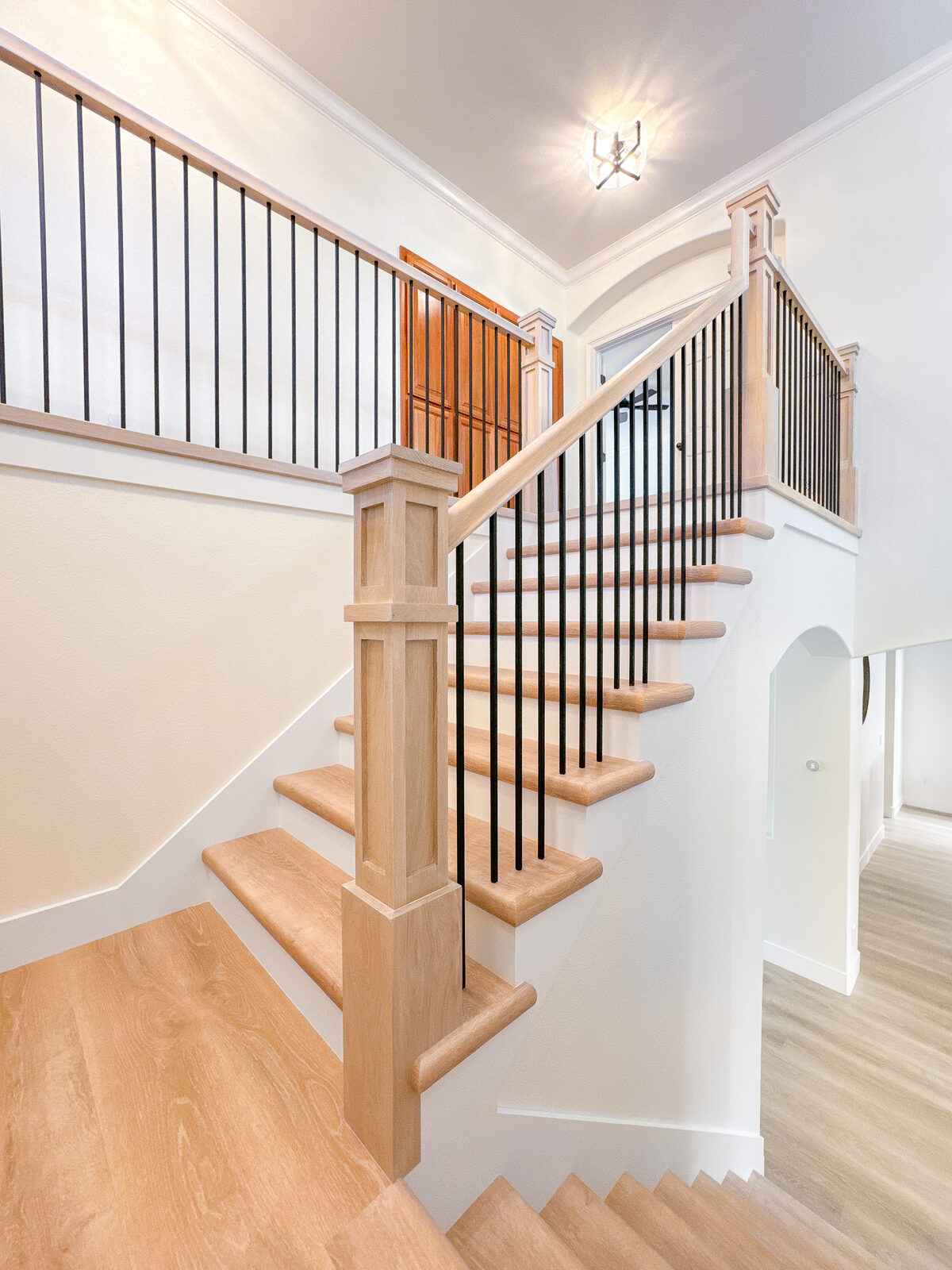
Full Stair & Railing Remodel
$16K–$25K+Includes: new treads and risers, skirtboards, handrails, posts, satin-black iron balusters, and full paint and stain work. The complete transformation — the most visible change and the most detailed work.
Varies by: staircase size, wood type, post style. Example: a small U-shaped staircase with full hardwood, painted risers, white oak handrails, and metal balusters runs around $18K; a large multi-level staircase with premium posts can go over $25K.
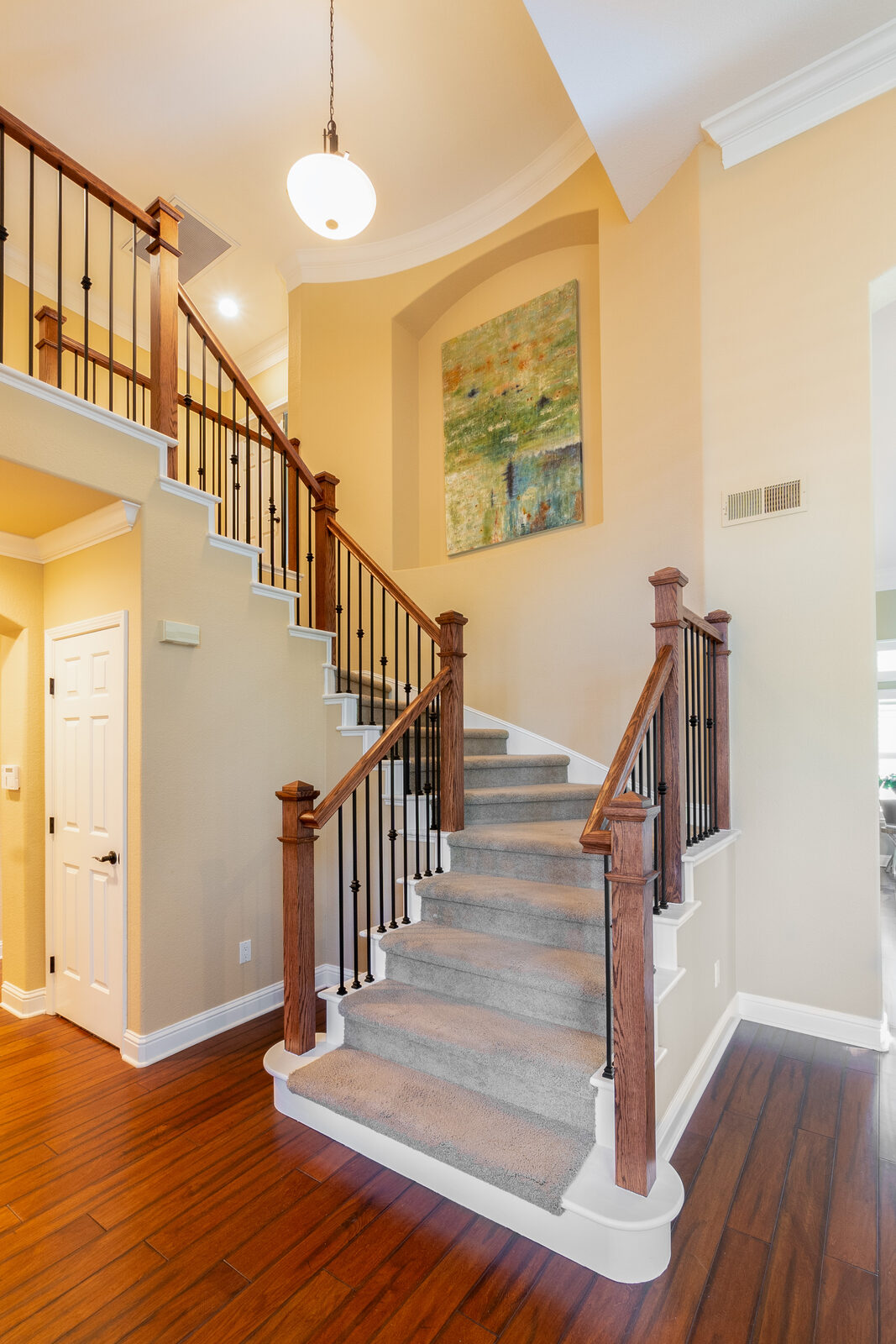
Railing System Upgrade
$8K–$15K+Includes: new posts, handrails, and balusters — no tread or riser work. A big visual impact, ideal if your steps are already upgraded or staying as-is.
Varies by: length of railing runs, landing size, post choice. Example: a mid-size straight stair with one balcony rail might be $9K–$10K; a larger staircase or long catwalk with multiple flights can reach $13K–$15K.
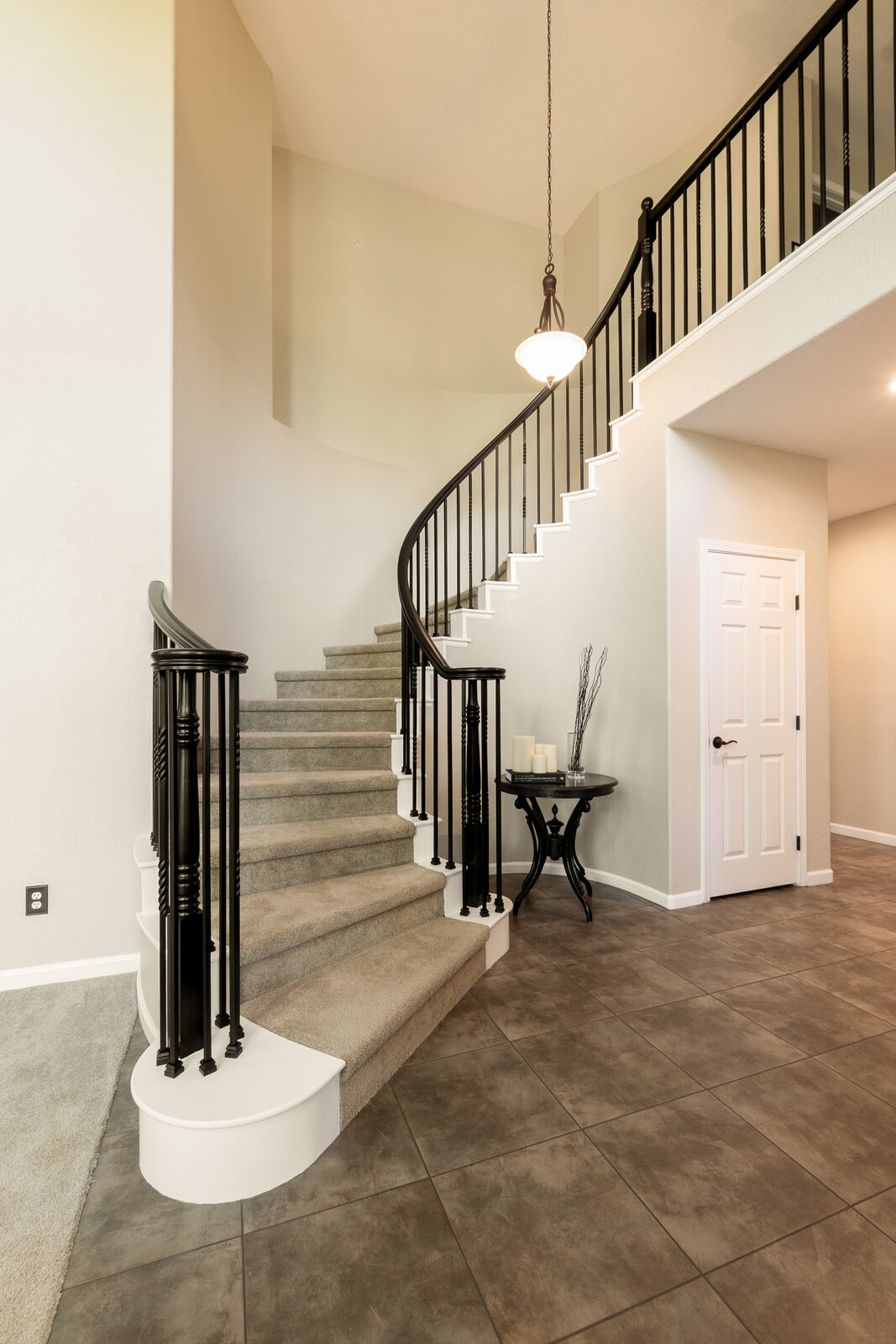
Baluster Swap & Rail Refresh
$2.5K–$7.5K+Includes: swapping your existing balusters, with optional handrail refinishing. Keeps your posts and layout — the budget-friendly way to modernize.
Varies by: staircase size and whether handrail refinishing is included. Example: a staircase with ~42 balusters might be around $2.5K; a medium staircase with ~70 balusters plus full rail refinishing could hit $5K–$7.5K.
What affects your cost the most
Post style
On larger staircases with multiple posts, larger, chunkier, or more detailed posts add material, installation, and finishing time over simpler designs.
Materials
Tread type, posts, handrails, and balusters vary widely by species, profile, and availability. Higher-end or custom materials need more handling, fitting, and finish work.
Finish level
The number of colors or tones plus surface prep drives labor. Single-color finishes are most efficient; two-tone designs, stain work, and refinishing add prep and detail.
Real projects, real prices
Each of these is a completed project with its actual price, materials, and timeline.
Complete stair & railing remodel
$20,500Laminate stair treads with white oak hardwood landing treads, white-painted risers and skirtboards, detailed white oak posts and modern handrails (stained to match the floor), and 1/2" black iron balusters. A full replacement to match an upgraded home.
Curved staircase — hardwood & railing update
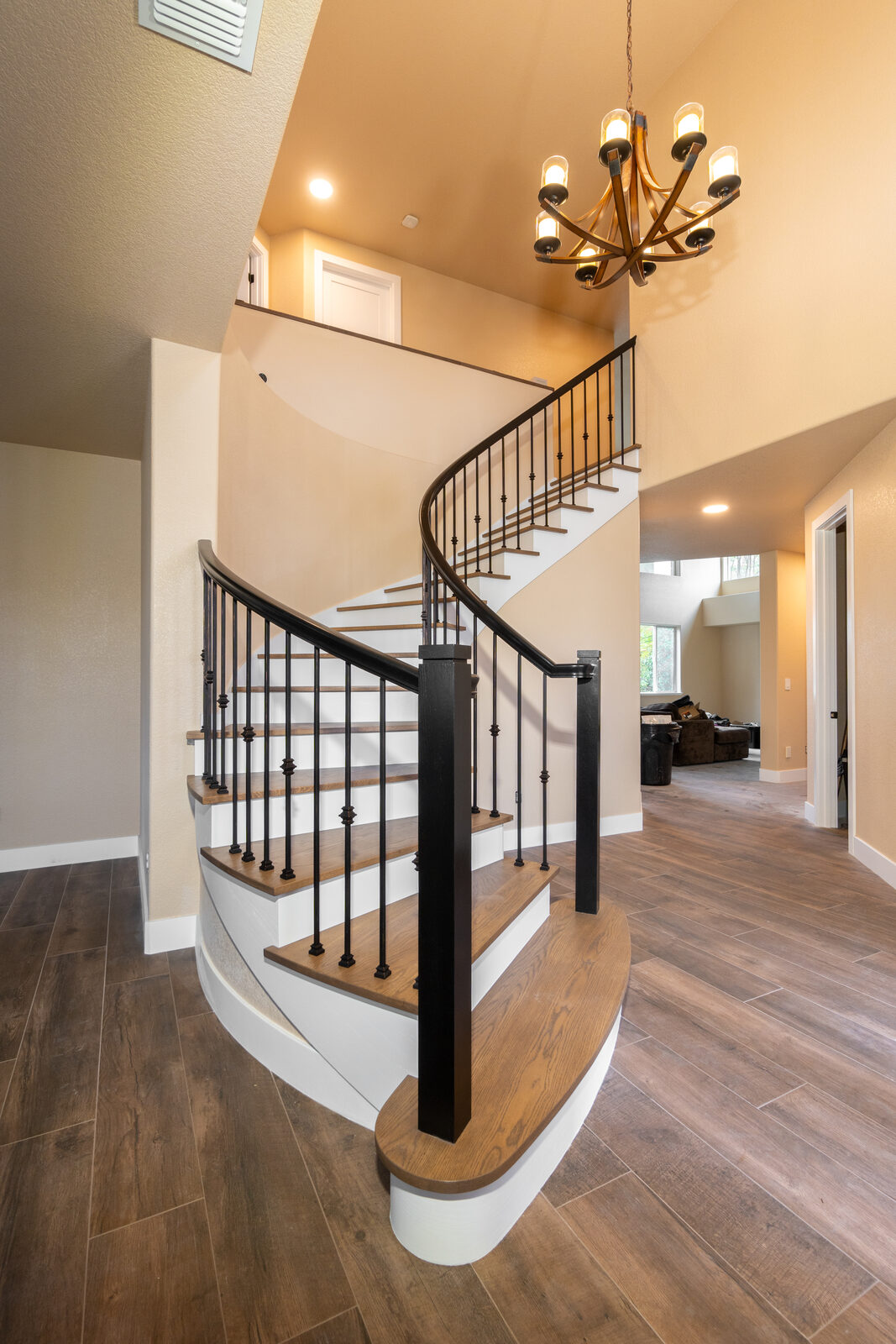
$17,500Custom white oak treads fabricated for curved steps, a contrasting custom stain, the existing curved handrail sanded, refinished and painted black, new squared posts, and oil-rubbed bronze balusters. Modernized while keeping the railing layout.
Full railing replacement
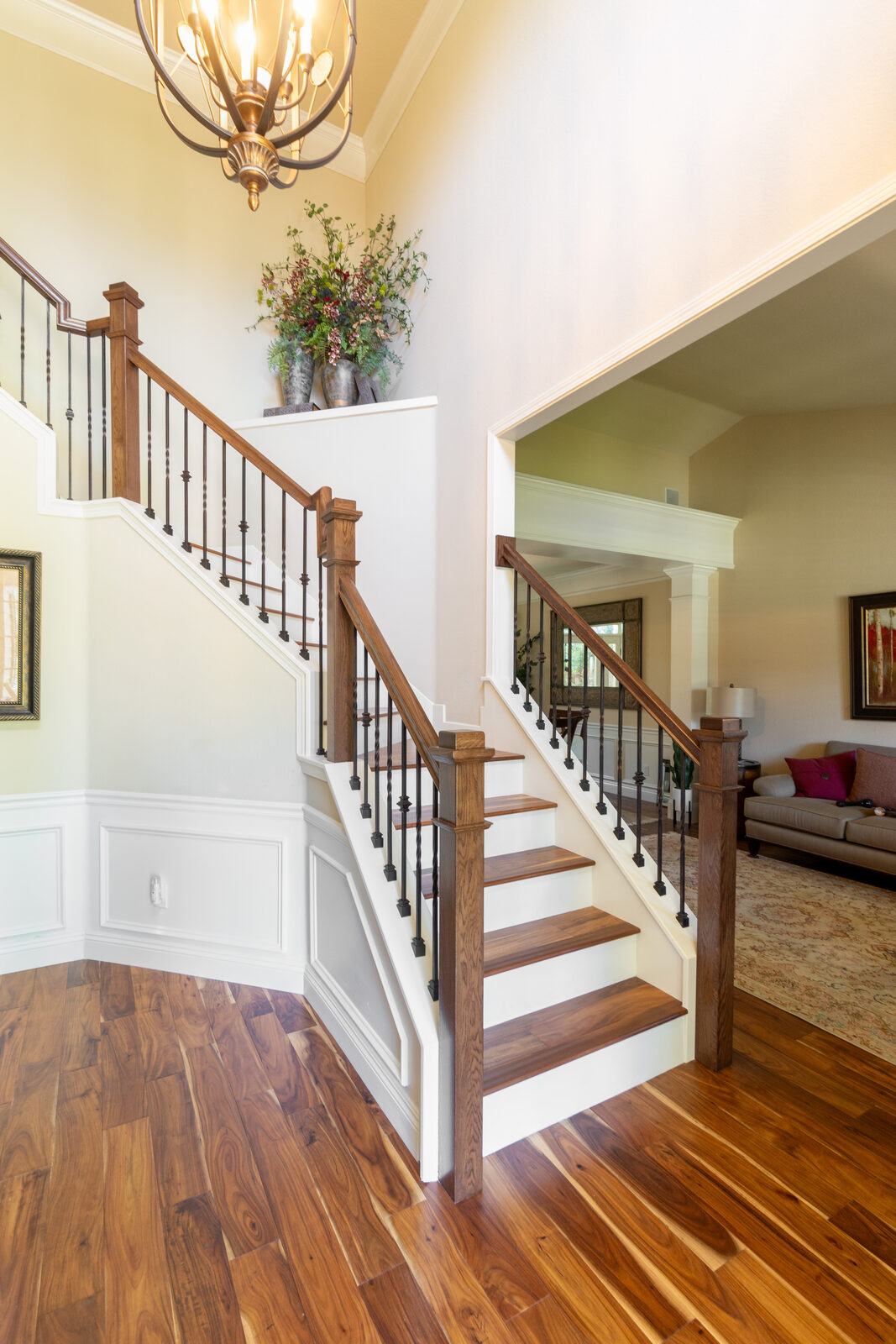
$13,000White oak box newel posts and handrails, custom stain matched to the floor, and 1/2" oil-rubbed bronze detailed-style balusters. For homeowners who already upgraded their floors and steps and wanted new railings to match.
Railing upgrade + pony wall removal
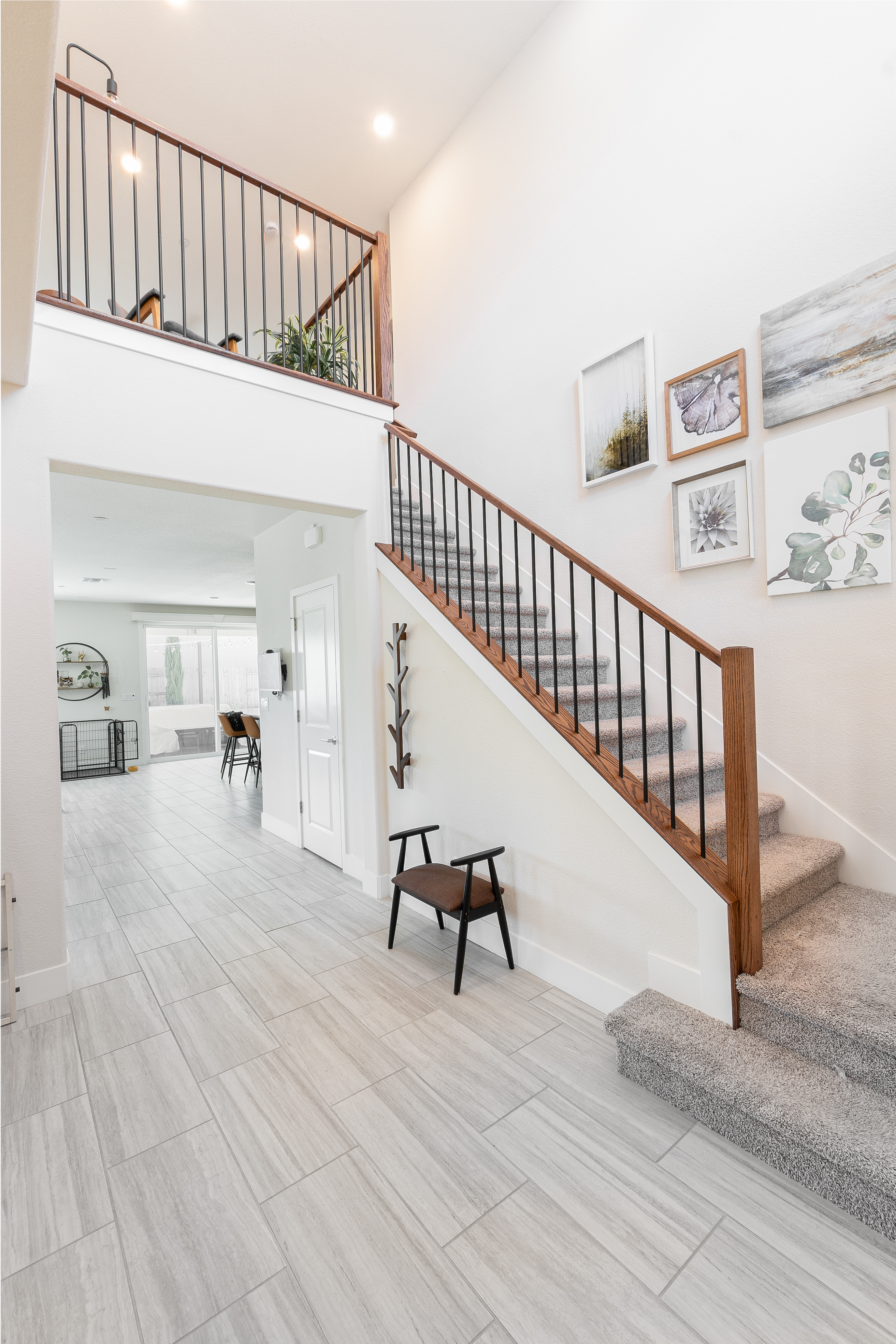
$9,000A boxed-in pony wall opened up to a clean railing layout, with new stained red oak posts, handrails, and wall caps. Removed builder-grade elements and modernized mid-2000s architecture.
Baluster swap & handrail refinish
$7,000Existing posts reused, satin-black twist-pattern iron balusters, and the red oak handrail sanded and painted black. A cost-effective visual update without replacing the structure.
Carpet to wood (client-supplied flooring)
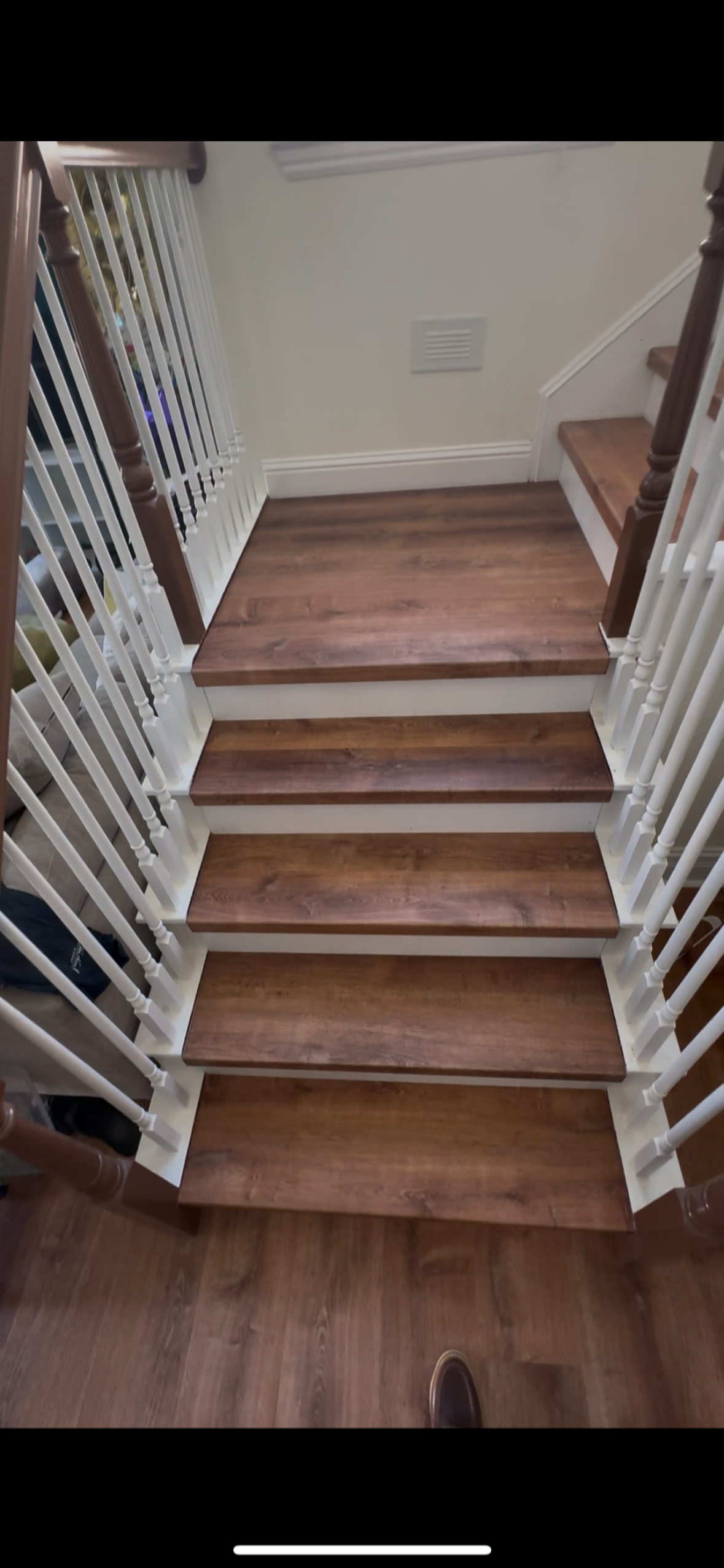
$3,300The homeowner's own flooring plus matching stair nosing installed on 14 steps and 2 landings — a labor-focused install to replace carpet with a clean, matching hard surface.
Common pricing questions
Hardwood or LVP/laminate treads — which costs more?
Both work; it comes down to priorities. Solid hardwood is the high-end, refinishable, long-term choice; LVP/laminate is lower-maintenance and matches your floors exactly. Curved staircases always require hardwood. We'll help you weigh it at the consultation.
Can the new stairs and railings match my floor color?
Yes — on average about 80% accurate, close enough that most people can't see a difference once it's done. Solid or engineered wood matches closer to 90%; LVP/laminate is around 80% since those are printed patterns, not real grain. We make stain samples on-site so you choose the tone before we begin.
Should I install my railings or my floors first?
It depends on your flooring. With floating LVP/laminate, railings should go first — newel posts must anchor to the subfloor, and floating floors can crack if posts are tightened on top. Solid or engineered wood is stable enough that either order works.
Want it all in one place?
Download the complete guide — six real projects, materials, and before/afters.
Get a Price Range for Your Staircase Project
Send a few photos of your staircase and we'll reply with a clear price range. If it's a good fit, we'll schedule an in-home consultation from there.
We serve Sacramento County , Placer County, and some of El Dorado County
Before you submit:
We specialize in interior stair remodels.
Projects we don’t take on:
❌ Exterior stairs
❌ Glass railing systems
❌ Full metal railing systems
❌ Structural staircase changes
Not sure if your project is a fit?
Send it anyway - we'll point you in the right direction.
Tip: Include wide shots of the full staircase from top to bottom so we can give you the most accurate price range.
Services
Company Info
Alamo Stairs
(916) 891 6878
Lic No. 1085687

Cities
Sacramento County, Surrounding Cities like Davis & Vacaville, Placer County,
and western El Dorado County up to Placerville
Auburn
Antelope
Cameron Park
Carmichael
Citrus Heights
Colfax
Davis
El Dorado Hills
Elk Grove
Fair Oaks
Folsom
Gold River
Granite Bay
Lincoln
Loomis
Newcastle
Orangevale
Penryn
Placerville
Rocklin
Roseville
Sacramento
Copyright 2026. Alamo Stairs. All Rights Reserved| Terms & Conditions